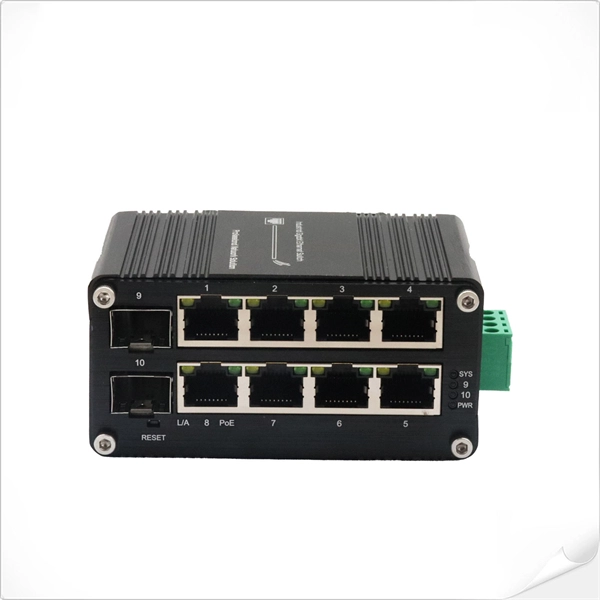
A Layer 3 aggregation switch consolidates traffic from multiple access switches and provides routing, high throughput, and advanced network management for enterprise or campus networks.
Overview
A Layer 3 aggregation switch sits in the aggregation layer of a three-tier network architecture, between the access layer (edge switches) and the core layer (high-speed backbone or routers). Its primary role is to aggregate traffic from multiple access devices, such as access switches, wireless access points, or servers, and forward it efficiently to the core network. By operating at Layer 3 of the OSI model, these switches can perform routing between VLANs, support IP address translation, and manage multicast and broadcast traffic.
Key Functions
Routing and Forwarding: Enables inter-VLAN routing and directs traffic efficiently across the network. Traffic Filtering and Security: Implements ACLs, firewall rules, and other security measures to protect the network. Quality of Service (QoS): Prioritizes critical traffic, ensuring performance for applications like VoIP or video conferencing.
Load Balancing and Redundancy: Supports link aggregation (LACP) and failover protocols (e.g., VRRP, MC-LAG) to maintain high availability. Multicast and Broadcast Control: Optimizes network performance by managing multicast traffic using IGMP/MLD snooping.
Advantages
Layer 3 aggregation switches provide high throughput, scalability, and flexibility, making them ideal for medium-to-large enterprises, data centers, and campus networks. They allow for centralized management, often via web interfaces, CLI, or cloud platforms, and support advanced features like end-to-end QoS, security policies, and network monitoring. Examples of Layer 3 Aggregation SwitchesGrandstream GWN7830 Series: Offers up to 24 SFP and 12 SFP+ ports, advanced VLAN, QoS, and cloud management.
Cisco Meraki MS450-12: Designed to connect multiple access layer devices for versatile network deployment. Ubiquiti Etherlighting™ Aggregation Switch: High-density 100G/25G switch with 1. 8 Tbps throughput, MC-LAG support, VRRP, and OSPF for high availability.
Deployment Considerations
When selecting a Layer 3 aggregation switch, consider: Port density and speed: Ensure sufficient uplinks for access switches and servers. Redundancy and failover: Support for MC-LAG, VRRP, or OSPF ensures network reliability. Management capabilities: Cloud or on-premise management platforms simplify monitoring and configuration.
Scalability: Ability to handle future growth in traffic and devices. Layer 3 aggregation switches are essential for building scalable, secure, and high-performance networks, bridging the access and core layers while providing advanced routing, traffic management, and redundancy features.