
Connect
Cables, patch cords, adapters, splitters and wavelength components define the optical path and its interfaces.
A focused communications-infrastructure resource for the people planning access networks, campus links, equipment rooms and protected telecom sites.
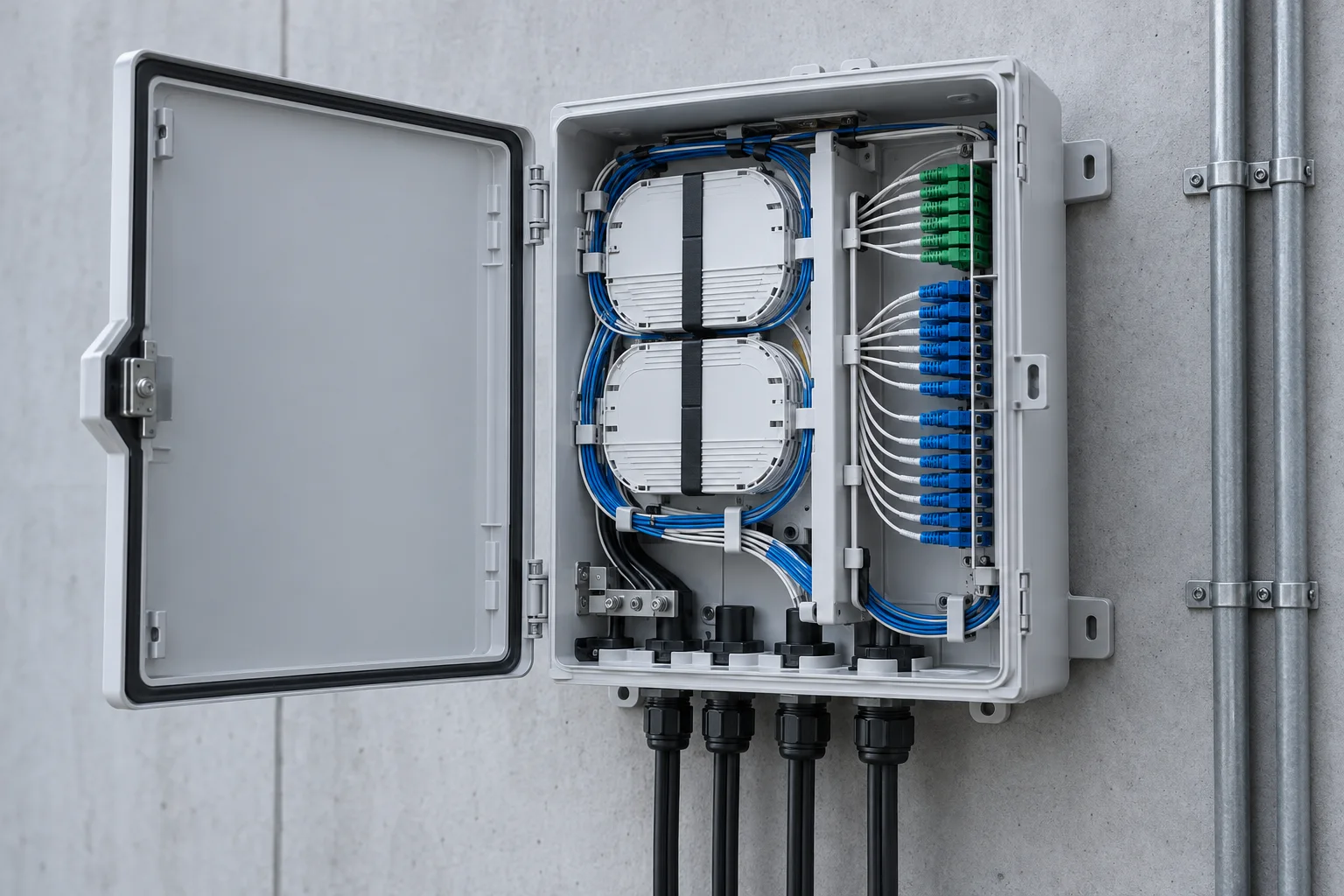
A distribution box is part of a route. A patch panel is part of a rack. An outdoor cabinet is part of a site. CJC FIBRE CONSULTANTS presents these relationships together so a product enquiry starts with the right context.
Our website covers passive fiber components, distribution hardware, equipment housing, cable pathways and communication-site support. It is organised for preliminary product selection and specification discussions across African project locations.
Explore network scenarios →Keep functional requirements visible from the optical route through to equipment access and site protection.
Cables, patch cords, adapters, splitters and wavelength components define the optical path and its interfaces.
Distribution boxes, cross-connect cabinets, ODFs, patch panels and splice closures manage fiber transitions.
Network cabinets, equipment racks, cable trays and raceways make density, bend control and service access workable.
Outdoor enclosures, shelters and telecom power assemblies bring environmental and electrical needs into the site brief.
Century City, Cape Town, Western Cape, South Africa. Include your project country and delivery destination when contacting us so the discussion can address the actual deployment context.
Project requirements vary between urban access routes, business campuses, coastal sites and remote installations. Climate, logistics, pathway access and maintenance arrangements belong in the first brief.
Contact CJC FibreUseful product comparisons show how an option meets the requirement, which accessories it needs and what remains to be confirmed.
State what the component must connect, terminate, house or protect.
Show the equipment and interfaces on either side of the product.
Request current drawings, ratings and relevant test documentation.
Keep assumptions and unresolved details visible as the brief develops.
Share a route, equipment list or initial bill of materials and identify the decisions still open.